
Deepavali in Malaysia: Meaning, Traditions, Kolam, Food & Customs Explained
We see the lights, colourful kolam, new clothes and trays of murukku every year. But what do these Deepavali traditions actually mean?
Deepavali is familiar to most Malaysians. We recognise the colourful kolam at shopping malls, the rows of oil lamps, traditional Indian clothing, temple visits, open houses and, of course, murukku.
But familiarity does not always mean understanding. Many of the elements we see every Deepavali have meanings that go far beyond decoration or festive tradition.
So what exactly is Deepavali? Why are lamps lit? Why is a kolam placed at the entrance? Why do families wear new clothes, take an oil bath and prepare particular foods?
What is Deepavali?
Deepavali, also known as Diwali, is a major Hindu festival commonly known as the Festival of Lights. At its heart are themes of light overcoming darkness, good overcoming evil and renewal. In Malaysia, Deepavali is celebrated through prayer, family gatherings, kolam, oil lamps, new clothing, festive food and the uniquely Malaysian tradition of welcoming guests through open houses.
1. What Does Deepavali Mean?
The name Deepavali is associated with rows of lighted lamps, which is why the festival is commonly known as the Festival of Lights.
The broader meaning centres on the triumph of light over darkness and good over evil.
It is important, however, not to reduce Deepavali to one single story.
Hindu communities have different regional, linguistic and family traditions. The stories, rituals and foods associated with Deepavali can therefore differ from one household to another.
One common misunderstanding
Deepavali should not simply be described as the “Indian New Year”. Renewal and fresh beginnings are important themes, but Deepavali is a distinct Hindu religious festival with its own traditions and significance.
2. Deepavali or Diwali — Which One Is Correct?
Both terms are used for the Festival of Lights.
The difference is largely connected to language and regional traditions in India.
In Malaysia, Deepavali is the term traditionally used more widely in public communication and among many Malaysian Indian communities.
That is why Malaysians are more accustomed to seeing phrases such as Hari Deepavali and Selamat Hari Deepavali.
3. Why Are Oil Lamps Lit During Deepavali?
The lamp is perhaps the clearest symbol of Deepavali.
Small traditional oil lamps, often known as diyas, are lit around homes and other spaces during the celebration.
The light represents the movement away from darkness towards goodness, knowledge and hope.
Today, traditional oil lamps may appear alongside candles, decorative lighting and modern festive displays. But the symbolism of light remains central to the celebration.
4. Why Is a Kolam Made During Deepavali?
The colourful design that Malaysians often see at entrances during Deepavali is known as a kolam.
Traditionally, kolam may be created using rice flour, coloured rice, chalk powder or similar materials.
Designs can range from simple geometric patterns to elaborate arrangements incorporating flowers, symmetrical motifs and symbolic forms.
More importantly, the kolam is associated with prosperity, good fortune and welcoming positive blessings into the home.
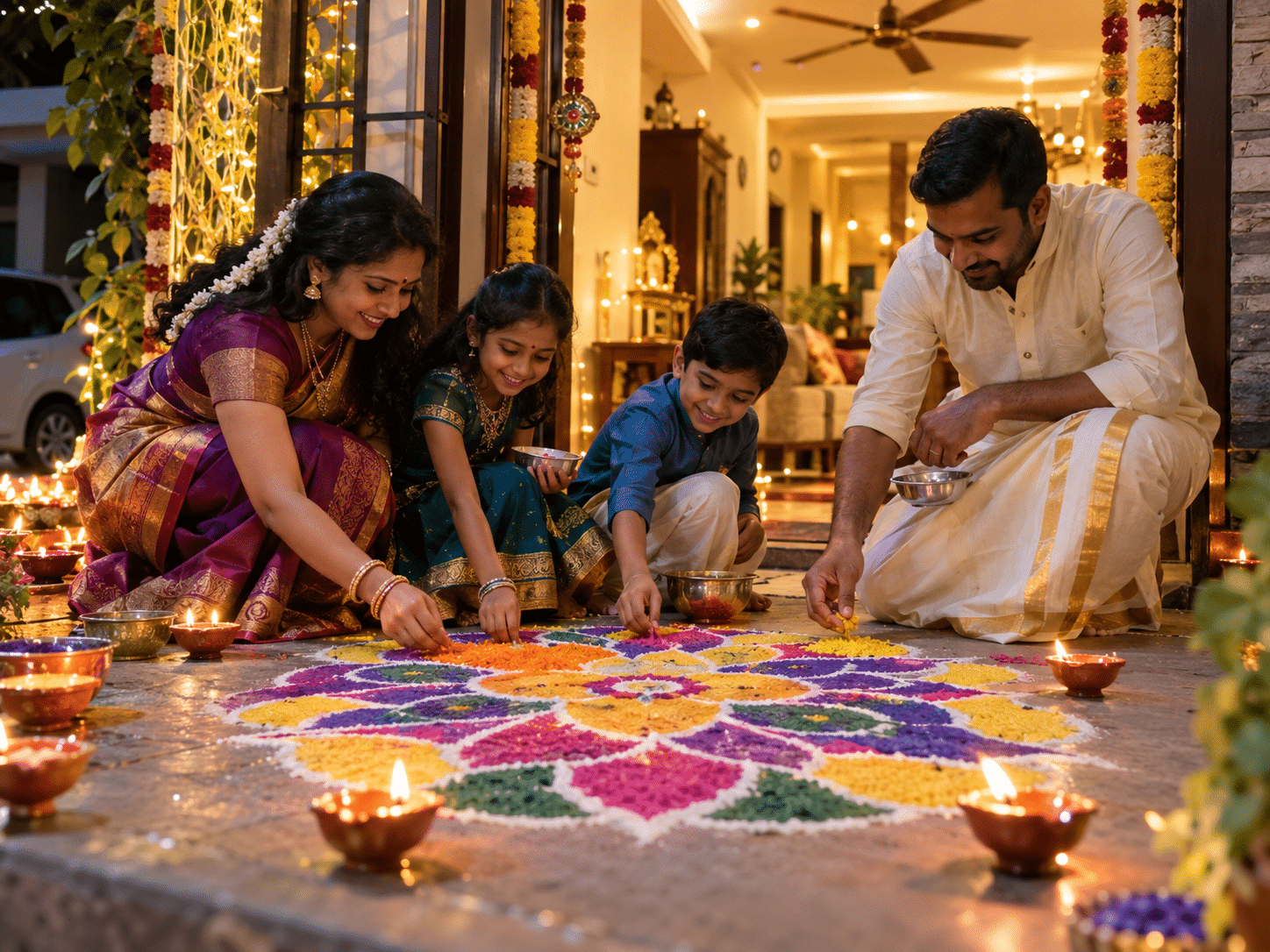
Why is the kolam placed near the entrance?
The entrance represents the point where people and blessings are welcomed into the home. This is one reason kolam designs are traditionally created near doorways and entrances rather than simply used as decorative artwork elsewhere.
5. Why Do Some Families Take an Oil Bath on Deepavali Morning?
One tradition that is less visible outside the home is the Deepavali morning oil bath.
Celebrations traditionally begin early, and some families apply oil before bathing as part of a cleansing ritual.
The practice carries the idea of purification and preparing oneself for a new beginning.
After bathing, family members may dress in new or festive clothing before prayers and family activities begin.
6. Why Are New Clothes Worn During Deepavali?
Buying and wearing new clothes is another familiar Deepavali tradition.
The practice represents renewal and a fresh beginning.
Many Malaysian Indian families wear traditional outfits for prayers, temple visits and gatherings.
Saree & Traditional Attire
Sarees and other traditional Indian garments, often paired with jewellery and bright festive colours, are commonly worn.
Kurta & Traditional Wear
Men may wear kurtas, dhotis or other traditional or contemporary Indian festive clothing.
7. What Role Do Prayers and Temples Play?
Beneath the public celebrations and colourful decorations, Deepavali remains a religious festival.
Families may conduct prayers at home and make offerings that can include fruits, flowers and sweets.
Many also visit Hindu temples for prayers and religious ceremonies.
This is an important part of understanding Deepavali: the lights, clothes and food are highly visible, but faith and prayer remain at the heart of the occasion for many celebrants.
8. What Food Is Traditionally Served During Deepavali in Malaysia?
There is no single Deepavali menu followed by every Malaysian Indian family.
Food varies according to family background, preference, region and tradition.
What most celebrations have in common is abundance and sharing.
Murukku
Crunchy and savoury, murukku has become one of the foods most closely associated with Deepavali in Malaysia.
Ladoo
Round sweets prepared in a variety of styles and ingredients and commonly served during Indian celebrations.
Gulab Jamun
Soft, rich sweets served in syrup and often enjoyed during festive gatherings.
Festive Meals
Vegetarian dishes, curries, rice dishes, snacks and family recipes may all form part of the celebration.
9. Why Is Murukku So Closely Associated With Deepavali in Malaysia?
For many Malaysians, murukku is almost inseparable from Deepavali.
Part of the reason is practical: it can be prepared in batches, stored and easily served to family members and guests throughout the festive period.
Over generations, it has also become part of Malaysia's wider food culture.
You do not need to celebrate Deepavali to recognise murukku — which is exactly why it has become one of the festival's most familiar cultural connections in Malaysia.
10. Why Are Open Houses Part of Deepavali in Malaysia?
The open house is where Deepavali takes on a particularly Malaysian character.
Families may invite relatives, neighbours, colleagues and friends from different communities to share food and spend time together.
This is why a Malaysian Deepavali gathering may include people from many different ethnic and religious backgrounds sitting around the same table.
The custom reflects something broader about Malaysian festive culture: religious celebrations can remain meaningful to the community observing them while still creating opportunities for others to share in the hospitality.
11. Deepavali Customs Malaysians Should Know
Malaysians are generally familiar with celebrating together, but understanding a few cultural practices makes that participation more meaningful.
12. Common Things Malaysians May Misunderstand About Deepavali
Deepavali is not just about lights and decorations
The visual elements have religious and cultural meaning. They are not simply festive styling.
Not every Hindu family celebrates exactly the same way
Malaysia's Hindu community includes families with different linguistic, regional and cultural backgrounds, so traditions may vary.
Murukku is part of the celebration — not the meaning of it
Food plays an important role in bringing families and guests together, but Deepavali remains a religious and cultural celebration.
Deepavali and Diwali are not rival festivals
Both names are used for the Festival of Lights. The terminology differs according to language and regional tradition.
13. What Makes Deepavali in Malaysia Special?
Deepavali in Malaysia is rooted in Hindu faith and Indian cultural traditions, but it also sits within Malaysia's wider multicultural identity.
Malaysians may see kolam displayed in shopping centres, receive murukku from colleagues, attend an open house organised by a friend or exchange Deepavali greetings at work.
These everyday interactions are why understanding the meaning behind the customs matters.
A kolam becomes more meaningful once we understand why it is placed at the entrance.
A row of oil lamps becomes more than decoration once we understand what the light represents.
And an open house becomes more than a festive meal once we recognise the hospitality and togetherness behind it.
Deepavali 2026 in Malaysia
In 2026, Hari Deepavali falls on Sunday, 8 November 2026.
In the weeks before the celebration, Malaysians can expect to see Deepavali decorations, kolam displays, festive clothing, food and cultural activities appearing across homes, workplaces and commercial spaces.
Beyond Murukku and Kolam
Deepavali is one of those Malaysian celebrations that many of us recognise instantly, even when we may not know the meaning behind every tradition.
The lamps represent light overcoming darkness.
The kolam represents welcome, prosperity and good fortune.
The oil bath and new clothing represent cleansing, renewal and a fresh beginning.
Prayer reminds us that beneath the festivities lies a religious celebration.
And food and open houses bring families, friends and communities together.
Perhaps that is the best way for Malaysians to understand Deepavali — not simply by recognising what we see every year, but by understanding the meaning behind it.
Celebrating the journeys and traditions we share as Malaysians.
Malaysia's diversity is part of what makes every journey through the country unique. This Deepavali, may the celebration bring light, togetherness and meaningful moments to everyone celebrating.